HEXPIRE
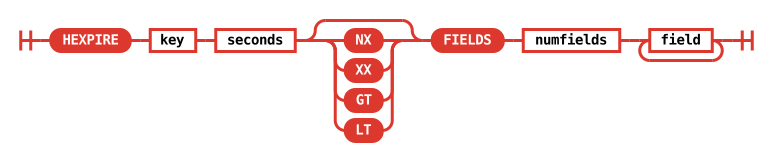
HEXPIRE key seconds [NX | XX | GT | LT] FIELDS numfields field
  [field ...]
- Available since:
- Redis Open Source 7.4.0
- Time complexity:
- O(N) where N is the number of specified fields
- ACL categories:
-
@write,@hash,@fast, - Compatibility:
- Redis Software and Redis Cloud compatibility
Set an expiration (TTL or time to live) on one or more fields of a given hash key. You must specify at least one field. Field(s) will automatically be deleted from the hash key when their TTLs expire.
Field expirations will only be cleared by commands that delete or overwrite the
contents of the hash fields, including HDEL and HSET
commands.
This means that all the operations that conceptually alter the value stored at a hash key's field without replacing it with a new one will leave the TTL untouched.
You can clear the TTL using the HPERSIST command, which turns the hash field back into a persistent field.
Note that calling HEXPIRE/HPEXPIRE with a zero TTL or
HEXPIREAT/HPEXPIREAT with a time in the past will result in the hash field being deleted.
Required arguments
key
The name of the key that holds the hash.
seconds
The time to live, in seconds. Each specified field is deleted after this many seconds.
FIELDS numfields field [field ...]
The hash fields to set expiration for. numfields is the number of fields, followed by that many field names.
Optional arguments
The following options modify the command's behavior. They are mutually exclusive.
NX
For each specified field, set expiration only when the field has no expiration.
XX
For each specified field, set expiration only when the field has an existing expiration.
GT
For each specified field, set expiration only when the new expiration is greater than the current one. A non-volatile field is treated as an infinite TTL for the purposes of GT.
LT
For each specified field, set expiration only when the new expiration is less than the current one. A non-volatile field is treated as an infinite TTL for the purposes of LT.
Refreshing expires
You can call HEXPIRE using as argument a field that already has an
existing TTL set.
In this case, the time to live is updated to the new value.
Redis Search and field expiration
Starting with Redis 8, Redis Search has enhanced behavior when handling expiring hash fields. For detailed information about how FT.SEARCH and FT.AGGREGATE commands interact with expiring hash fields, see Key and field expiration behavior.
Examples
> HEXPIRE no-key 20 NX FIELDS 2 field1 field2
1) (integer) -2
2) (integer) -2
> HSET mykey field1 "hello" field2 "world"
(integer) 2
> HEXPIRE mykey 10 FIELDS 3 field1 field2 field3
1) (integer) 1
2) (integer) 1
3) (integer) -2
> HGETALL mykey
# Set up hash with fields
r.hset("myhash", mapping={"field1": "Hello", "field2": "World"})

# Set expiration on hash fields
res12 = r.hexpire("myhash", 10, "field1", "field2")
print(res12)  # >>> [1, 1]

# Check TTL of the fields
res13 = r.httl("myhash", "field1", "field2")
print(res13)  # >>> [10, 10] (or close to 10)

# Try to set expiration on non-existent field
res14 = r.hexpire("myhash", 10, "nonexistent")
print(res14)  # >>> [-2]
import redis

r = redis.Redis(host="localhost", port=6379, db=0, decode_responses=True)

hdel1 = r.hset("myhash", "field1", "foo")
print(hdel1)
# >>> 1

hdel2 = r.hdel("myhash", "field1")
print(hdel2)
# >>> 1

hdel3 = r.hdel("myhash", "field2")
print(hdel3)
# >>> 0


res1 = r.hset("myhash", "field1", "Hello")
print(res1)
# >>> 1

res2 = r.hget("myhash", "field1")
print(res2)
# >>> Hello

res3 = r.hset("myhash", mapping={"field2": "Hi", "field3": "World"})
print(res3)
# >>> 2

res4 = r.hget("myhash", "field2")
print(res4)
# >>> Hi

res5 = r.hget("myhash", "field3")
print(res5)
# >>> World

res6 = r.hgetall("myhash")
print(res6)
# >>> { "field1": "Hello", "field2": "Hi", "field3": "World" }


res7 = r.hset("myhash", "field1", "foo")
print(res7)
# >>> 1

res8 = r.hget("myhash", "field1")
print(res8)
# >>> foo

res9 = r.hget("myhash", "field2")
print(res9)
# >>> None


r.hset("myhash", mapping={"field1": "Hello", "field2": "World"})

hmget_result = r.hmget("myhash", ["field1", "field2", "nofield"])
print(hmget_result)  # >>> ['Hello', 'World', None]


res10 = r.hset("myhash", mapping={"field1": "Hello", "field2": "World"})

res11 = r.hgetall("myhash")
print(res11) # >>> { "field1": "Hello", "field2": "World" }


res10 = r.hset("myhash", mapping={"field1": "Hello", "field2": "World"})

# HVALS follows the hash's field order, which Redis does not promise, so sort.
res11 = r.hvals("myhash")
print(sorted(res11)) # >>> [ "Hello", "World" ]


# Set up hash with fields
r.hset("myhash", mapping={"field1": "Hello", "field2": "World"})

# Set expiration on hash fields
res12 = r.hexpire("myhash", 10, "field1", "field2")
print(res12)  # >>> [1, 1]

# Check TTL of the fields
res13 = r.httl("myhash", "field1", "field2")
print(res13)  # >>> [10, 10] (or close to 10)

# Try to set expiration on non-existent field
res14 = r.hexpire("myhash", 10, "nonexistent")
print(res14)  # >>> [-2]


res15 = r.hset("myhash", "field1", "Hello")
print(res15)
# >>> 1

res16 = r.hset("myhash", "field2", "World")
print(res16)
# >>> 1

res17 = r.hlen("myhash")
print(res17)
# >>> 2
// Set up hash with fields
await client.hSet('myhash', {
  'field1': 'Hello',
  'field2': 'World'
})

// Set expiration on hash fields
const res14 = await client.hExpire('myhash', ['field1', 'field2'], 10)
console.log(res14) // [1, 1]

// Check TTL of the fields
const res15 = await client.hTTL('myhash', ['field1', 'field2'])
console.log(res15) // [10, 10] (or close to 10)

// Try to set expiration on non-existent field
const res16 = await client.hExpire('myhash', ['nonexistent'], 10)
console.log(res16) // [-2]
import assert from 'node:assert';
import { createClient } from 'redis';

const client = createClient();
await client.connect().catch(console.error);


const hDel1 = await client.hSet('myhash', 'field1', 'Hello')
console.log(hDel1) // 1

const hDel2 = await client.hDel('myhash', 'field1')
console.log(hDel2) // 1

const hDel3 = await client.hDel('myhash', 'field2')
console.log(hDel3) // 0


const res1 = await client.hSet('myhash', 'field1', 'Hello')
console.log(res1) // 1

const res2 = await client.hGet('myhash', 'field1')
console.log(res2) // Hello

const res3 = await client.hSet(
  'myhash',
  {
    'field2': 'Hi',
    'field3': 'World'
  }
)
console.log(res3) // 2

const res4 = await client.hGet('myhash', 'field2')
console.log(res4) // Hi

const res5 = await client.hGet('myhash', 'field3')
console.log(res5) // World

const res6 = await client.hGetAll('myhash')
console.log(res6)


const res7 = await client.hSet('myhash', 'field1', 'foo')
console.log(res7) // 1

const res8 = await client.hGet('myhash', 'field1')
console.log(res8) // foo

const res9 = await client.hGet('myhash', 'field2')
console.log(res9) // null


await client.hSet('myhash', { field1: 'Hello', field2: 'World' });

const hmgetResult = await client.hmGet('myhash', ['field1', 'field2', 'nofield']);
console.log(hmgetResult); // ['Hello', 'World', null]


const res10 = await client.hSet(
  'myhash',
  {
    'field1': 'Hello',
    'field2': 'World'
  }
)

const res11 = await client.hGetAll('myhash')
console.log(res11) // [Object: null prototype] { field1: 'Hello', field2: 'World' }


const res12 = await client.hSet(
  'myhash',
  {
    'field1': 'Hello',
    'field2': 'World'
  }
)

// HVALS follows the hash's field order, which Redis does not promise, so sort.
const res13 = (await client.hVals('myhash')).sort()
console.log(res13) // [ 'Hello', 'World' ]


// Set up hash with fields
await client.hSet('myhash', {
  'field1': 'Hello',
  'field2': 'World'
})

// Set expiration on hash fields
const res14 = await client.hExpire('myhash', ['field1', 'field2'], 10)
console.log(res14) // [1, 1]

// Check TTL of the fields
const res15 = await client.hTTL('myhash', ['field1', 'field2'])
console.log(res15) // [10, 10] (or close to 10)

// Try to set expiration on non-existent field
const res16 = await client.hExpire('myhash', ['nonexistent'], 10)
console.log(res16) // [-2]


const res17 = await client.hSet('myhash', 'field1', 'Hello')
console.log(res17) // 1

const res18 = await client.hSet('myhash', 'field2', 'World')
console.log(res18) // 1

const res19 = await client.hLen('myhash')
console.log(res19) // 2


await client.close();
await redis.hset('myhash', { field1: 'Hello', field2: 'World' });

const hexpireRes1 = await redis.hexpire('myhash', 10, 'FIELDS', 2, 'field1', 'field2');
console.log(hexpireRes1); // >>> [ 1, 1 ]

const hexpireRes2 = await redis.httl('myhash', 'FIELDS', 2, 'field1', 'field2');
console.log(hexpireRes2); // >>> [ 10, 10 ]

// -2 means the field does not exist.
const hexpireRes3 = await redis.hexpire('myhash', 10, 'FIELDS', 1, 'nonexistent');
console.log(hexpireRes3); // >>> [ -2 ]
import assert from 'node:assert';
import { Redis } from 'ioredis';

const redis = new Redis();


await redis.hset('myhash', { field1: 'Hello', field2: 'World' });

const hmgetResult = await redis.hmget('myhash', 'field1', 'field2', 'nofield');
console.log(hmgetResult); // >>> ['Hello', 'World', null]


const hlenSet1 = await redis.hset('myhash', 'field1', 'Hello');
console.log(hlenSet1); // >>> 1

const hlenSet2 = await redis.hset('myhash', 'field2', 'World');
console.log(hlenSet2); // >>> 1

const hlenResult = await redis.hlen('myhash');
console.log(hlenResult); // >>> 2


const hsetRes1 = await redis.hset('myhash', 'field1', 'Hello');
console.log(hsetRes1); // >>> 1

console.log(await redis.hget('myhash', 'field1')); // >>> Hello

const hsetRes2 = await redis.hset('myhash', { field2: 'Hi', field3: 'World' });
console.log(hsetRes2); // >>> 2

console.log(await redis.hget('myhash', 'field2')); // >>> Hi
console.log(await redis.hget('myhash', 'field3')); // >>> World

const hsetRes3 = await redis.hgetall('myhash');
console.log(hsetRes3);
// >>> { field1: 'Hello', field2: 'Hi', field3: 'World' }


const hgetRes1 = await redis.hset('myhash', 'field1', 'foo');
console.log(hgetRes1); // >>> 1

const hgetRes2 = await redis.hget('myhash', 'field1');
console.log(hgetRes2); // >>> foo

// A field that does not exist reads back as null.
const hgetRes3 = await redis.hget('myhash', 'field2');
console.log(hgetRes3); // >>> null


await redis.hset('myhash', { field1: 'Hello', field2: 'World' });

const hgetallRes = await redis.hgetall('myhash');
console.log(hgetallRes); // >>> { field1: 'Hello', field2: 'World' }


const hdelRes1 = await redis.hset('myhash', 'field1', 'foo');
console.log(hdelRes1); // >>> 1

const hdelRes2 = await redis.hdel('myhash', 'field1');
console.log(hdelRes2); // >>> 1

// Deleting a field that is not there removes nothing.
const hdelRes3 = await redis.hdel('myhash', 'field2');
console.log(hdelRes3); // >>> 0


await redis.hset('myhash', { field1: 'Hello', field2: 'World' });

// HVALS follows the hash's field order, which Redis does not promise, so sort.
const hvalsRes = await redis.hvals('myhash');
console.log(hvalsRes.sort()); // >>> [ 'Hello', 'World' ]


await redis.hset('myhash', { field1: 'Hello', field2: 'World' });

const hexpireRes1 = await redis.hexpire('myhash', 10, 'FIELDS', 2, 'field1', 'field2');
console.log(hexpireRes1); // >>> [ 1, 1 ]

const hexpireRes2 = await redis.httl('myhash', 'FIELDS', 2, 'field1', 'field2');
console.log(hexpireRes2); // >>> [ 10, 10 ]

// -2 means the field does not exist.
const hexpireRes3 = await redis.hexpire('myhash', 10, 'FIELDS', 1, 'nonexistent');
console.log(hexpireRes3); // >>> [ -2 ]


redis.disconnect();
        // Set up hash with fields
        Map<String, String> hExpireExampleParams = new HashMap<>();
        hExpireExampleParams.put("field1", "Hello");
        hExpireExampleParams.put("field2", "World");
        jedis.hset("myhash", hExpireExampleParams);

        // Set expiration on hash fields
        List<Long> hExpireResult1 = jedis.hexpire("myhash", 10, "field1", "field2");
        System.out.println(hExpireResult1); // >>> [1, 1]

        // Check TTL of the fields
        List<Long> hExpireResult2 = jedis.httl("myhash", "field1", "field2");
        System.out.println(hExpireResult2.size()); // >>> 2

        // Try to set expiration on non-existent field
        List<Long> hExpireResult3 = jedis.hexpire("myhash", 10, "nonexistent");
        System.out.println(hExpireResult3); // >>> [-2]
import java.util.HashMap;
import java.util.Map;
import java.util.List;
import java.util.Collections;
import java.util.Arrays;

import redis.clients.jedis.RedisClient;

import static java.util.stream.Collectors.toList;
import static org.junit.jupiter.api.Assertions.assertEquals;
import static org.junit.jupiter.api.Assertions.assertNull;
import static org.junit.jupiter.api.Assertions.assertTrue;

public class CmdsHashExample {

    public void run() {
        RedisClient jedis = RedisClient.create("redis://localhost:6379");


        Map<String, String> hDelExampleParams = new HashMap<>();
        hDelExampleParams.put("field1", "foo");

        long hDelResult1 = jedis.hset("myhash", hDelExampleParams);
        System.out.println(hDelResult1);    // >>> 1

        long hDelResult2 = jedis.hdel("myhash", "field1");
        System.out.println(hDelResult2);    // >>> 1

        long hDelResult3 = jedis.hdel("myhash", "field2");
        System.out.println(hDelResult3);    // >>> 0

        Map<String, String> hGetExampleParams = new HashMap<>();
        hGetExampleParams.put("field1", "foo");

        long hGetResult1 = jedis.hset("myhash", hGetExampleParams);
        System.out.println(hGetResult1);    // >>> 1

        String hGetResult2 = jedis.hget("myhash", "field1");
        System.out.println(hGetResult2);    // >>> foo

        String hGetResult3 = jedis.hget("myhash", "field2");
        System.out.println(hGetResult3);    // >>> null

        Map<String, String> hmgetExampleParams = new HashMap<>();
        hmgetExampleParams.put("field1", "Hello");
        hmgetExampleParams.put("field2", "World");

        jedis.hset("myhash", hmgetExampleParams);

        List<String> hmgetResult = jedis.hmget("myhash", "field1", "field2", "nofield");
        System.out.println(hmgetResult);    // >>> [Hello, World, null]

        Map<String, String> hGetAllExampleParams = new HashMap<>();
        hGetAllExampleParams.put("field1", "Hello");
        hGetAllExampleParams.put("field2", "World");

        long hGetAllResult1 = jedis.hset("myhash", hGetAllExampleParams);
        System.out.println(hGetAllResult1); // >>> 2

        Map<String, String> hGetAllResult2 = jedis.hgetAll("myhash");
        System.out.println(
            hGetAllResult2.entrySet().stream()
                    .sorted((s1, s2)-> s1.getKey().compareTo(s2.getKey()))
                    .collect(toList())
                    .toString()
        );
        // >>> [field1=Hello, field2=World]

        Map<String, String> hSetExampleParams = new HashMap<>();
        hSetExampleParams.put("field1", "Hello");
        long hSetResult1 = jedis.hset("myhash", hSetExampleParams);
        System.out.println(hSetResult1);    // >>> 1

        String hSetResult2 = jedis.hget("myhash", "field1");
        System.out.println(hSetResult2);    // >>> Hello

        hSetExampleParams.clear();
        hSetExampleParams.put("field2", "Hi");
        hSetExampleParams.put("field3", "World");
        long hSetResult3 = jedis.hset("myhash",hSetExampleParams);
        System.out.println(hSetResult3);    // >>> 2

        String hSetResult4 = jedis.hget("myhash", "field2");
        System.out.println(hSetResult4);    // >>> Hi

        String hSetResult5 = jedis.hget("myhash", "field3");
        System.out.println(hSetResult5);    // >>> World

        Map<String, String> hSetResult6 = jedis.hgetAll("myhash");

        for (String key: hSetResult6.keySet()) {
            System.out.println("Key: " + key + ", Value: " + hSetResult6.get(key));
        }
        // >>> Key: field3, Value: World
        // >>> Key: field2, Value: Hi
        // >>> Key: field1, Value: Hello

        Map<String, String> hValsExampleParams = new HashMap<>();
        hValsExampleParams.put("field1", "Hello");
        hValsExampleParams.put("field2", "World");

        long hValsResult1 = jedis.hset("myhash", hValsExampleParams);
        System.out.println(hValsResult1); // >>> 2

        List<String> hValsResult2 = jedis.hvals("myhash");
        Collections.sort(hValsResult2);
        System.out.println(hValsResult2);
        // >>> [Hello, World]

        // Set up hash with fields
        Map<String, String> hExpireExampleParams = new HashMap<>();
        hExpireExampleParams.put("field1", "Hello");
        hExpireExampleParams.put("field2", "World");
        jedis.hset("myhash", hExpireExampleParams);

        // Set expiration on hash fields
        List<Long> hExpireResult1 = jedis.hexpire("myhash", 10, "field1", "field2");
        System.out.println(hExpireResult1); // >>> [1, 1]

        // Check TTL of the fields
        List<Long> hExpireResult2 = jedis.httl("myhash", "field1", "field2");
        System.out.println(hExpireResult2.size()); // >>> 2

        // Try to set expiration on non-existent field
        List<Long> hExpireResult3 = jedis.hexpire("myhash", 10, "nonexistent");
        System.out.println(hExpireResult3); // >>> [-2]

        // `hset` returns 1 because `field1` is a new field.
        long hLenResult1 = jedis.hset("myhash", "field1", "Hello");
        System.out.println(hLenResult1);    // >>> 1

        // `hset` returns 1 because `field2` is also a new field.
        long hLenResult2 = jedis.hset("myhash", "field2", "World");
        System.out.println(hLenResult2);    // >>> 1

        long hLenResult3 = jedis.hlen("myhash");
        System.out.println(hLenResult3);    // >>> 2

        jedis.close();
    }
}
            // Set up a hash with two fields.
            Map<String, String> hExpireFields = new HashMap<>();
            hExpireFields.put("field1", "Hello");
            hExpireFields.put("field2", "World");

            syncCommands.hset("myhash", hExpireFields);

            // Set the expiration of both fields. `hexpire` returns a status
            // code for each field, where 1 means the expiration was set.
            List<Long> res16 = syncCommands.hexpire("myhash", 10, "field1", "field2");
            System.out.println(res16); // >>> [1, 1]

            // Check the time to live of the fields.
            List<Long> res17 = syncCommands.httl("myhash", "field1", "field2");
            System.out.println(res17); // >>> [10, 10]

            // Try to set the expiration of a field that doesn't exist.
            // The status code -2 means there's no such field.
            List<Long> res18 = syncCommands.hexpire("myhash", 10, "nonexistent");
            System.out.println(res18); // >>> [-2]
package io.redis.examples.sync;

import io.lettuce.core.*;
import io.lettuce.core.api.sync.RedisCommands;
import io.lettuce.core.api.StatefulRedisConnection;

import java.util.*;

public class CmdsHashExample {

    public void run() {
        RedisClient redisClient = RedisClient.create("redis://localhost:6379");

        try (StatefulRedisConnection<String, String> connection = redisClient.connect()) {
            RedisCommands<String, String> syncCommands = connection.sync();


            // `hset` returns true because `field1` is a new field.
            boolean res1 = syncCommands.hset("myhash", "field1", "foo");
            System.out.println(res1); // >>> true

            Long res2 = syncCommands.hdel("myhash", "field1");
            System.out.println(res2); // >>> 1

            // `hdel` returns 0 because `field2` doesn't exist.
            Long res3 = syncCommands.hdel("myhash", "field2");
            System.out.println(res3); // >>> 0


            // `hset` returns true because `field1` is a new field.
            boolean res4 = syncCommands.hset("myhash", "field1", "Hello");
            System.out.println(res4); // >>> true

            String res5 = syncCommands.hget("myhash", "field1");
            System.out.println(res5); // >>> Hello

            // The `Map` overload of `hset` returns the number of new fields.
            Map<String, String> newFields = new HashMap<>();
            newFields.put("field2", "Hi");
            newFields.put("field3", "World");

            Long res6 = syncCommands.hset("myhash", newFields);
            System.out.println(res6); // >>> 2

            String res7 = syncCommands.hget("myhash", "field2");
            System.out.println(res7); // >>> Hi

            String res8 = syncCommands.hget("myhash", "field3");
            System.out.println(res8); // >>> World

            // `hgetall` returns a `Map`, whose iteration order isn't
            // guaranteed. Wrap it in a `TreeMap` to sort the fields by name.
            Map<String, String> res9 = syncCommands.hgetall("myhash");
            System.out.println(new TreeMap<>(res9));
            // >>> {field1=Hello, field2=Hi, field3=World}


            // `hset` returns true because `field1` is a new field.
            boolean res10 = syncCommands.hset("myhash", "field1", "foo");
            System.out.println(res10); // >>> true

            String res11 = syncCommands.hget("myhash", "field1");
            System.out.println(res11); // >>> foo

            // `hget` returns null because `field2` doesn't exist.
            String res12 = syncCommands.hget("myhash", "field2");
            System.out.println(res12); // >>> null


            Map<String, String> hmgetFields = new HashMap<>();
            hmgetFields.put("field1", "Hello");
            hmgetFields.put("field2", "World");

            syncCommands.hset("myhash", hmgetFields);

            // `hmget` returns a `KeyValue` for each field you ask for, in the
            // order you asked for them. A field that doesn't exist comes back
            // as an empty `KeyValue`.
            List<KeyValue<String, String>> res13 = syncCommands.hmget("myhash", "field1", "field2", "nofield");
            System.out.println(res13);
            // >>> [KeyValue[field1, Hello], KeyValue[field2, World], KeyValue[nofield].empty]


            Map<String, String> hGetAllFields = new HashMap<>();
            hGetAllFields.put("field1", "Hello");
            hGetAllFields.put("field2", "World");

            syncCommands.hset("myhash", hGetAllFields);

            // `hgetall` returns a `Map`, whose iteration order isn't
            // guaranteed. Wrap it in a `TreeMap` to sort the fields by name.
            Map<String, String> res14 = syncCommands.hgetall("myhash");
            System.out.println(new TreeMap<>(res14));
            // >>> {field1=Hello, field2=World}


            Map<String, String> hValsFields = new HashMap<>();
            hValsFields.put("field1", "Hello");
            hValsFields.put("field2", "World");

            syncCommands.hset("myhash", hValsFields);

            // The order of the values isn't guaranteed, so sort them before
            // printing.
            List<String> res15 = syncCommands.hvals("myhash");
            List<String> sortedValues = new ArrayList<>(res15);
            Collections.sort(sortedValues);
            System.out.println(sortedValues); // >>> [Hello, World]


            // Set up a hash with two fields.
            Map<String, String> hExpireFields = new HashMap<>();
            hExpireFields.put("field1", "Hello");
            hExpireFields.put("field2", "World");

            syncCommands.hset("myhash", hExpireFields);

            // Set the expiration of both fields. `hexpire` returns a status
            // code for each field, where 1 means the expiration was set.
            List<Long> res16 = syncCommands.hexpire("myhash", 10, "field1", "field2");
            System.out.println(res16); // >>> [1, 1]

            // Check the time to live of the fields.
            List<Long> res17 = syncCommands.httl("myhash", "field1", "field2");
            System.out.println(res17); // >>> [10, 10]

            // Try to set the expiration of a field that doesn't exist.
            // The status code -2 means there's no such field.
            List<Long> res18 = syncCommands.hexpire("myhash", 10, "nonexistent");
            System.out.println(res18); // >>> [-2]


            // `hset` returns true because `field1` is a new field.
            boolean res19 = syncCommands.hset("myhash", "field1", "Hello");
            System.out.println(res19); // >>> true

            // `hset` returns true because `field2` is also a new field.
            boolean res20 = syncCommands.hset("myhash", "field2", "World");
            System.out.println(res20); // >>> true

            Long res21 = syncCommands.hlen("myhash");
            System.out.println(res21); // >>> 2

        } finally {
            redisClient.shutdown();
        }
    }
}
            // Set up hash with fields
            Map<String, String> hExpireExampleParams = new HashMap<>();
            hExpireExampleParams.put("field1", "Hello");
            hExpireExampleParams.put("field2", "World");

            CompletableFuture<Void> hExpireExample = asyncCommands.hset("myhash", hExpireExampleParams).thenCompose(res1 -> {
                // Set expiration on hash fields
                return asyncCommands.hexpire("myhash", 10, "field1", "field2");
            }).thenCompose(res2 -> {
                System.out.println(res2);
                // >>> [1, 1]
                // Check TTL of the fields
                return asyncCommands.httl("myhash", "field1", "field2");
            }).thenCompose(res3 -> {
                System.out.println(res3.size());
                // >>> 2
                // Try to set expiration on non-existent field
                return asyncCommands.hexpire("myhash", 10, "nonexistent");
            })
                    .thenAccept(System.out::println)
                    // >>> -2
                    .toCompletableFuture();
package io.redis.examples.async;

import io.lettuce.core.*;
import io.lettuce.core.api.async.RedisAsyncCommands;
import io.lettuce.core.api.StatefulRedisConnection;

import java.util.*;
import java.util.concurrent.CompletableFuture;

public class CmdsHashExample {

    public void run() {

            Map<String, String> hDelExampleParams = new HashMap<>();
            hDelExampleParams.put("field1", "foo");

            CompletableFuture<Void> hDelExample = asyncCommands.hset("myhash", hDelExampleParams).thenCompose(res1 -> {
                System.out.println(res1); // >>> 1
                return asyncCommands.hdel("myhash", "field1");
            }).thenCompose(res2 -> {
                System.out.println(res2); // >>> 1
                return asyncCommands.hdel("myhash", "field2");
            }).thenAccept(res3 -> {
                System.out.println(res3); // >>> 0
            }).toCompletableFuture();

            hDelExample.join();

            CompletableFuture<Void> hSetExample = asyncCommands.hset("myhash", "field1", "Hello").thenCompose(res1 -> {
                System.out.println(res1); // >>> 1
                return asyncCommands.hget("myhash", "field1");
            }).thenCompose(res2 -> {
                System.out.println(res2); // >>> Hello
                Map<String, String> hSetExampleParams = new HashMap<>();
                hSetExampleParams.put("field2", "Hi");
                hSetExampleParams.put("field3", "World");
                return asyncCommands.hset("myhash", hSetExampleParams);
            }).thenCompose(res3 -> {
                System.out.println(res3); // >>> 2
                return asyncCommands.hget("myhash", "field2");
            }).thenCompose(res4 -> {
                System.out.println(res4); // >>> Hi
                return asyncCommands.hget("myhash", "field3");
            }).thenCompose(res5 -> {
                System.out.println(res5); // >>> World
                return asyncCommands.hgetall("myhash");
            }).thenAccept(res6 -> {
                System.out.println(res6);
                // >>> {field1=Hello, field2=Hi, field3=World}
            }).toCompletableFuture();

            hSetExample.join();

            Map<String, String> hGetExampleParams = new HashMap<>();
            hGetExampleParams.put("field1", "foo");

            CompletableFuture<Void> hGetExample = asyncCommands.hset("myhash", hGetExampleParams).thenCompose(res1 -> {
                System.out.println(res1); // >>> 1
                return asyncCommands.hget("myhash", "field1");
            }).thenCompose(res2 -> {
                System.out.println(res2); // >>> foo
                return asyncCommands.hget("myhash", "field2");
            }).thenAccept(res3 -> {
                System.out.println(res3); // >>> null
            }).toCompletableFuture();

            hGetExample.join();

            Map<String, String> hmgetExampleParams = new HashMap<>();
            hmgetExampleParams.put("field1", "Hello");
            hmgetExampleParams.put("field2", "World");

            CompletableFuture<Void> hmgetExample = asyncCommands.hset("myhash", hmgetExampleParams).thenCompose(res1 -> {
                return asyncCommands.hmget("myhash", "field1", "field2", "nofield");
            }).thenAccept(res2 -> {
                System.out.println(res2); // >>> [KeyValue[field1, Hello], KeyValue[field2, World], KeyValue[nofield].empty]
            }).toCompletableFuture();

            hmgetExample.join();

            Map<String, String> hGetAllExampleParams = new HashMap<>();
            hGetAllExampleParams.put("field1", "Hello");
            hGetAllExampleParams.put("field2", "World");

            CompletableFuture<Void> hGetAllExample = asyncCommands.hset("myhash", hGetAllExampleParams).thenCompose(res1 -> {
                return asyncCommands.hgetall("myhash");
            }).thenAccept(res2 -> {
                System.out.println(res2);
                // >>> {field1=Hello, field2=World}
            }).toCompletableFuture();

            hGetAllExample.join();

            Map<String, String> hValsExampleParams = new HashMap<>();
            hValsExampleParams.put("field1", "Hello");
            hValsExampleParams.put("field2", "World");

            CompletableFuture<Void> hValsExample = asyncCommands.hset("myhash", hValsExampleParams).thenCompose(res1 -> {
                return asyncCommands.hvals("myhash");
            }).thenAccept(res2 -> {
                List<String> sortedValues = new ArrayList<>(res2);
                Collections.sort(sortedValues);
                System.out.println(sortedValues);
                // >>> [Hello, World]
            }).toCompletableFuture();

            hValsExample.join();

            // Set up hash with fields
            Map<String, String> hExpireExampleParams = new HashMap<>();
            hExpireExampleParams.put("field1", "Hello");
            hExpireExampleParams.put("field2", "World");

            CompletableFuture<Void> hExpireExample = asyncCommands.hset("myhash", hExpireExampleParams).thenCompose(res1 -> {
                // Set expiration on hash fields
                return asyncCommands.hexpire("myhash", 10, "field1", "field2");
            }).thenCompose(res2 -> {
                System.out.println(res2);
                // >>> [1, 1]
                // Check TTL of the fields
                return asyncCommands.httl("myhash", "field1", "field2");
            }).thenCompose(res3 -> {
                System.out.println(res3.size());
                // >>> 2
                // Try to set expiration on non-existent field
                return asyncCommands.hexpire("myhash", 10, "nonexistent");
            })
                    .thenAccept(System.out::println)
                    // >>> -2
                    .toCompletableFuture();

            hExpireExample.join();

            CompletableFuture<Void> hLenExample = asyncCommands.hset("myhash", "field1", "Hello").thenCompose(res1 -> {
                // `hset` returns true because `field1` is a new field.
                System.out.println(res1); // >>> true
                return asyncCommands.hset("myhash", "field2", "World");
            }).thenCompose(res2 -> {
                // `hset` returns true because `field2` is also a new field.
                System.out.println(res2); // >>> true
                return asyncCommands.hlen("myhash");
            }).thenAccept(res3 -> {
                System.out.println(res3); // >>> 2
            }).toCompletableFuture();

            hLenExample.join();
        } finally {
            redisClient.shutdown();
        }
    }

}
            // Set up hash with fields
            Map<String, String> hExpireExampleParams = new HashMap<>();
            hExpireExampleParams.put("field1", "Hello");
            hExpireExampleParams.put("field2", "World");

            Mono<Long> hExpireExample1 = reactiveCommands.hset("myhash", hExpireExampleParams).doOnNext(result -> {
            });

            hExpireExample1.block();

            // Set expiration on hash fields
            Mono<List<Long>> hExpireExample2 = reactiveCommands.hexpire("myhash", 10, "field1", "field2").collectList().doOnNext(result -> {
                System.out.println(result);
                // >>> [1, 1]
            });

            hExpireExample2.block();

            // Check TTL of the fields
            Mono<List<Long>> hExpireExample3 = reactiveCommands.httl("myhash", "field1", "field2").collectList().doOnNext(result -> {
                System.out.println(result.size());
                // >>> 2
            });

            hExpireExample3.block();

            // Try to set expiration on non-existent field
            Mono<List<Long>> hExpireExample4 = reactiveCommands.hexpire("myhash", 10, "nonexistent").collectList().doOnNext(result -> {
                System.out.println(result);
                // >>> [-2]
            });
package io.redis.examples.reactive;

import io.lettuce.core.*;
import io.lettuce.core.api.reactive.RedisReactiveCommands;
import io.lettuce.core.api.StatefulRedisConnection;

import reactor.core.publisher.Flux;
import reactor.core.publisher.Mono;

import java.util.*;

public class CmdsHashExample {

    public void run() {
        RedisClient redisClient = RedisClient.create("redis://localhost:6379");

        try (StatefulRedisConnection<String, String> connection = redisClient.connect()) {
            RedisReactiveCommands<String, String> reactiveCommands = connection.reactive();

            Map<String, String> hDelExampleParams = new HashMap<>();
            hDelExampleParams.put("field1", "foo");

            Mono<Long> hDelExample1 = reactiveCommands.hset("myhash", hDelExampleParams).doOnNext(result -> {
                System.out.println(result); // >>> 1
            });

            hDelExample1.block();

            Mono<Long> hDelExample2 = reactiveCommands.hdel("myhash", "field1").doOnNext(result -> {
                System.out.println(result); // >>> 1
            });

            hDelExample2.block();

            Mono<Long> hDelExample3 = reactiveCommands.hdel("myhash", "field2").doOnNext(result -> {
                System.out.println(result); // >>> 0
            });

            hDelExample3.block();

            Mono<Boolean> hSetExample1 = reactiveCommands.hset("myhash", "field1", "Hello").doOnNext(result -> {
                System.out.println(result); // >>> True
            });

            hSetExample1.block();

            Mono<String> hSetExample2 = reactiveCommands.hget("myhash", "field1").doOnNext(result -> {
                System.out.println(result); // >>> Hello
            });

            hSetExample2.block();

            Map<String, String> hSetExampleParams = new HashMap<>();
            hSetExampleParams.put("field2", "Hi");
            hSetExampleParams.put("field3", "World");

            Mono<Long> hSetExample3 = reactiveCommands.hset("myhash", hSetExampleParams).doOnNext(result -> {
                System.out.println(result); // >>> 2
            });

            hSetExample3.block();

            Mono<String> hSetExample4 = reactiveCommands.hget("myhash", "field2").doOnNext(result -> {
                System.out.println(result); // >>> Hi
            });

            hSetExample4.block();

            Mono<String> hSetExample5 = reactiveCommands.hget("myhash", "field3").doOnNext(result -> {
                System.out.println(result); // >>> World
            });

            hSetExample5.block();

            Mono<Map<String, String>> hSetExample6 = reactiveCommands.hgetall("myhash").collectMap(
                    KeyValue::getKey, KeyValue::getValue
            ).doOnNext(result -> {
                System.out.println(result);
                // >>> {field1=Hello, field2=Hi, field3=World}
            });

            hSetExample6.block();

            Map<String, String> hGetExampleParams = new HashMap<>();
            hGetExampleParams.put("field1", "foo");

            Mono<Long> hGetExample1 = reactiveCommands.hset("myhash", hGetExampleParams).doOnNext(result -> {
                System.out.println(result); // >>> 1
            });

            hGetExample1.block();

            Mono<String> hGetExample2 = reactiveCommands.hget("myhash", "field1").doOnNext(result -> {
                System.out.println(result); // >>> foo
            });

            hGetExample2.block();

            Mono<String> hGetExample3 = reactiveCommands.hget("myhash", "field2").doOnNext(result -> {
                System.out.println(result); // >>> null
            });

            hGetExample3.block();

            Map<String, String> hmgetExampleParams = new HashMap<>();
            hmgetExampleParams.put("field1", "Hello");
            hmgetExampleParams.put("field2", "World");

            Mono<Long> hmgetExample1 = reactiveCommands.hset("myhash", hmgetExampleParams);

            hmgetExample1.block();

            Flux<KeyValue<String, String>> hmgetExample2 = reactiveCommands.hmget("myhash", "field1", "field2", "nofield")
                    .doOnNext(result -> {
                        System.out.println(result);
                        // >>> KeyValue[field1, Hello]
                        // >>> KeyValue[field2, World]
                        // >>> KeyValue[nofield].empty
                    });

            hmgetExample2.collectList().block();

            Map<String, String> hGetAllExampleParams = new HashMap<>();
            hGetAllExampleParams.put("field1", "Hello");
            hGetAllExampleParams.put("field2", "World");

            Mono<Long> hGetAllExample1 = reactiveCommands.hset("myhash", hGetAllExampleParams).doOnNext(result -> {
            });

            hGetAllExample1.block();

            Mono<Map<String, String>> hGetAllExample2 = reactiveCommands.hgetall("myhash").collectMap(
                    KeyValue::getKey, KeyValue::getValue
            ).doOnNext(result -> {
                System.out.println(result);
                // >>> {field1=Hello, field2=World}
            });

            hGetAllExample2.block();

            Map<String, String> hValsExampleParams = new HashMap<>();
            hValsExampleParams.put("field1", "Hello");
            hValsExampleParams.put("field2", "World");

            Mono<Long> hValsExample1 = reactiveCommands.hset("myhash", hValsExampleParams).doOnNext(result -> {
            });

            hValsExample1.block();

            Mono<List<String>> hValsExample2 = reactiveCommands.hvals("myhash").collectList().doOnNext(result -> {
                List<String> sortedValues = new ArrayList<>(result);
                Collections.sort(sortedValues);
                System.out.println(sortedValues);
                // >>> [Hello, World]
            });

            hValsExample2.block();

            // Set up hash with fields
            Map<String, String> hExpireExampleParams = new HashMap<>();
            hExpireExampleParams.put("field1", "Hello");
            hExpireExampleParams.put("field2", "World");

            Mono<Long> hExpireExample1 = reactiveCommands.hset("myhash", hExpireExampleParams).doOnNext(result -> {
            });

            hExpireExample1.block();

            // Set expiration on hash fields
            Mono<List<Long>> hExpireExample2 = reactiveCommands.hexpire("myhash", 10, "field1", "field2").collectList().doOnNext(result -> {
                System.out.println(result);
                // >>> [1, 1]
            });

            hExpireExample2.block();

            // Check TTL of the fields
            Mono<List<Long>> hExpireExample3 = reactiveCommands.httl("myhash", "field1", "field2").collectList().doOnNext(result -> {
                System.out.println(result.size());
                // >>> 2
            });

            hExpireExample3.block();

            // Try to set expiration on non-existent field
            Mono<List<Long>> hExpireExample4 = reactiveCommands.hexpire("myhash", 10, "nonexistent").collectList().doOnNext(result -> {
                System.out.println(result);
                // >>> [-2]
            });

            hExpireExample4.block();

            Mono<Boolean> hLenExample1 = reactiveCommands.hset("myhash", "field1", "Hello").doOnNext(result -> {
                System.out.println(result); // >>> true
            });

            hLenExample1.block();

            Mono<Boolean> hLenExample2 = reactiveCommands.hset("myhash", "field2", "World").doOnNext(result -> {
                System.out.println(result); // >>> true
            });

            hLenExample2.block();

            Mono<Long> hLenExample3 = reactiveCommands.hlen("myhash").doOnNext(result -> {
                System.out.println(result); // >>> 2
            });

            hLenExample3.block();
        } finally {
            redisClient.shutdown();
        }
    }

}
	// Set up hash with fields
	rdb.HSet(ctx, "myhash", "field1", "Hello", "field2", "World")

	// Set expiration on hash fields
	res1, err := rdb.HExpire(ctx, "myhash", 10*time.Second, "field1", "field2").Result()

	if err != nil {
		fmt.Println(err)
	}

	fmt.Println(res1) // >>> [1 1]

	// Check TTL of the fields
	res2, err := rdb.HTTL(ctx, "myhash", "field1", "field2").Result()

	if err != nil {
		fmt.Println(err)
	}

	fmt.Println(len(res2)) // >>> 2

	// Try to set expiration on non-existent field
	res3, err := rdb.HExpire(ctx, "myhash", 10*time.Second, "nonexistent").Result()

	if err != nil {
		fmt.Println(err)
	}

	fmt.Println(res3) // >>> [-2]

	// Clean up
	rdb.Del(ctx, "myhash")
package example_commands_test

import (
	"context"
	"fmt"
	"sort"
	"time"

	"github.com/redis/go-redis/v9"
)


func ExampleClient_hset() {
	ctx := context.Background()

	rdb := redis.NewClient(&redis.Options{
		Addr:     "localhost:6379",
		Password: "", // no password docs
		DB:       0,  // use default DB
	})


	res1, err := rdb.HSet(ctx, "myhash", "field1", "Hello").Result()

	if err != nil {
		panic(err)
	}

	fmt.Println(res1) // >>> 1

	res2, err := rdb.HGet(ctx, "myhash", "field1").Result()

	if err != nil {
		panic(err)
	}

	fmt.Println(res2) // >>> Hello

	res3, err := rdb.HSet(ctx, "myhash",
		"field2", "Hi",
		"field3", "World",
	).Result()

	if err != nil {
		panic(err)
	}

	fmt.Println(res3) // >>> 2

	res4, err := rdb.HGet(ctx, "myhash", "field2").Result()

	if err != nil {
		panic(err)
	}

	fmt.Println(res4) // >>> Hi

	res5, err := rdb.HGet(ctx, "myhash", "field3").Result()

	if err != nil {
		panic(err)
	}

	fmt.Println(res5) // >>> World

	res6, err := rdb.HGetAll(ctx, "myhash").Result()

	if err != nil {
		panic(err)
	}

	keys := make([]string, 0, len(res6))

	for key, _ := range res6 {
		keys = append(keys, key)
	}

	sort.Strings(keys)

	for _, key := range keys {
		fmt.Printf("Key: %v, value: %v\n", key, res6[key])
	}
	// >>> Key: field1, value: Hello
	// >>> Key: field2, value: Hi
	// >>> Key: field3, value: World

}

func ExampleClient_hget() {
	ctx := context.Background()

	rdb := redis.NewClient(&redis.Options{
		Addr:     "localhost:6379",
		Password: "", // no password docs
		DB:       0,  // use default DB
	})


	res7, err := rdb.HSet(ctx, "myhash", "field1", "foo").Result()

	if err != nil {
		panic(err)
	}

	fmt.Println(res7) // >>> 1

	res8, err := rdb.HGet(ctx, "myhash", "field1").Result()

	if err != nil {
		panic(err)
	}

	fmt.Println(res8) // >>> foo

	res9, err := rdb.HGet(ctx, "myhash", "field2").Result()

	if err != nil {
		fmt.Println(err)
	}

	fmt.Println(res9) // >>> <empty string>

}

func ExampleClient_hmget() {
	ctx := context.Background()

	rdb := redis.NewClient(&redis.Options{
		Addr:     "localhost:6379",
		Password: "", // no password
		DB:       0,  // use default DB
	})


	rdb.HSet(ctx, "myhash", "field1", "Hello", "field2", "World")

	hmgetResult, err := rdb.HMGet(ctx, "myhash", "field1", "field2", "nofield").Result()

	if err != nil {
		panic(err)
	}

	fmt.Println(hmgetResult) // >>> [Hello World <nil>]


}

func ExampleClient_hgetall() {
	ctx := context.Background()

	rdb := redis.NewClient(&redis.Options{
		Addr:     "localhost:6379",
		Password: "", // no password
		DB:       0,  // use default DB
	})


	hGetAllResult1, err := rdb.HSet(ctx, "myhash",
		"field1", "Hello",
		"field2", "World",
	).Result()

	if err != nil {
		panic(err)
	}

	fmt.Println(hGetAllResult1) // >>> 2

	hGetAllResult2, err := rdb.HGetAll(ctx, "myhash").Result()

	if err != nil {
		panic(err)
	}

	keys := make([]string, 0, len(hGetAllResult2))

	for key, _ := range hGetAllResult2 {
		keys = append(keys, key)
	}

	sort.Strings(keys)

	for _, key := range keys {
		fmt.Printf("Key: %v, value: %v\n", key, hGetAllResult2[key])
	}
	// >>> Key: field1, value: Hello
	// >>> Key: field2, value: World

}

func ExampleClient_hvals() {
	ctx := context.Background()

	rdb := redis.NewClient(&redis.Options{
		Addr:     "localhost:6379",
		Password: "", // no password docs
		DB:       0,  // use default DB
	})


	hValsResult1, err := rdb.HSet(ctx, "myhash",
		"field1", "Hello",
		"field2", "World",
	).Result()

	if err != nil {
		panic(err)
	}

	fmt.Println(hValsResult1) // >>> 2

	hValsResult2, err := rdb.HVals(ctx, "myhash").Result()

	if err != nil {
		panic(err)
	}

	sort.Strings(hValsResult2)

	fmt.Println(hValsResult2) // >>> [Hello World]

}

func ExampleClient_hdel() {
	ctx := context.Background()

	rdb := redis.NewClient(&redis.Options{
		Addr:     "localhost:6379",
		Password: "", // no password docs
		DB:       0,  // use default DB
	})


	hdel1, err := rdb.HSet(ctx, "myhash", "field1", "foo").Result()

	if err != nil {
		panic(err)
	}

	fmt.Println(hdel1) // >>> 1

	hdel2, err := rdb.HDel(ctx, "myhash", "field1").Result()

	if err != nil {
		panic(err)
	}

	fmt.Println(hdel2) // >>> 1

	hdel3, err := rdb.HDel(ctx, "myhash", "field2").Result()

	if err != nil {
		fmt.Println(err)
	}

	fmt.Println(hdel3) // >>> 0

}

func ExampleClient_hexpire() {
	ctx := context.Background()

	rdb := redis.NewClient(&redis.Options{
		Addr:     "localhost:6379",
		Password: "", // no password
		DB:       0,  // use default DB
	})

	// Set up hash with fields
	rdb.HSet(ctx, "myhash", "field1", "Hello", "field2", "World")

	// Set expiration on hash fields
	res1, err := rdb.HExpire(ctx, "myhash", 10*time.Second, "field1", "field2").Result()

	if err != nil {
		fmt.Println(err)
	}

	fmt.Println(res1) // >>> [1 1]

	// Check TTL of the fields
	res2, err := rdb.HTTL(ctx, "myhash", "field1", "field2").Result()

	if err != nil {
		fmt.Println(err)
	}

	fmt.Println(len(res2)) // >>> 2

	// Try to set expiration on non-existent field
	res3, err := rdb.HExpire(ctx, "myhash", 10*time.Second, "nonexistent").Result()

	if err != nil {
		fmt.Println(err)
	}

	fmt.Println(res3) // >>> [-2]

	// Clean up
	rdb.Del(ctx, "myhash")

}

func ExampleClient_hlen() {
	ctx := context.Background()

	rdb := redis.NewClient(&redis.Options{
		Addr:     "localhost:6379",
		Password: "", // no password
		DB:       0,  // use default DB
	})


	hlen1, err := rdb.HSet(ctx, "myhash", "field1", "Hello").Result()

	if err != nil {
		panic(err)
	}

	fmt.Println(hlen1) // >>> 1

	hlen2, err := rdb.HSet(ctx, "myhash", "field2", "World").Result()

	if err != nil {
		panic(err)
	}

	fmt.Println(hlen2) // >>> 1

	hlen3, err := rdb.HLen(ctx, "myhash").Result()

	if err != nil {
		panic(err)
	}

	fmt.Println(hlen3) // >>> 2


}
    reply = redisCommand(c, "HSET myhash field1 Hello field2 World");
    freeReplyObject(reply);

    // HEXPIRE needs the field count before the field names.
    reply = redisCommand(c, "HEXPIRE myhash 10 FIELDS 2 field1 field2");
    for (size_t i = 0; i < reply->elements; i++) {
        printf("%lld\n", reply->element[i]->integer);
    }
    // >>> 1
    // >>> 1
    freeReplyObject(reply);

    reply = redisCommand(c, "HTTL myhash FIELDS 2 field1 field2");
    for (size_t i = 0; i < reply->elements; i++) {
        printf("%lld\n", reply->element[i]->integer);
    }
    // >>> 10
    // >>> 10
    freeReplyObject(reply);

    // -2 means the field does not exist.
    reply = redisCommand(c, "HEXPIRE myhash 10 FIELDS 1 nonexistent");
    printf("%lld\n", reply->element[0]->integer);
    // >>> -2
    freeReplyObject(reply);
#include <stdio.h>
#include <stdlib.h>
#include <string.h>
#include <hiredis/hiredis.h>


int main(int argc, char **argv) {
    redisContext *c = redisConnect("127.0.0.1", 6379);

    if (c == NULL || c->err) {
        if (c) {
            printf("Connection error: %s\n", c->errstr);
            redisFree(c);
        } else {
            printf("Connection error: can't allocate redis context\n");
        }
        return 1;
    }


    redisReply *reply;

    // Set up hash with fields
    reply = redisCommand(c, "HSET %s %s %s %s %s",
        "myhash", "field1", "Hello", "field2", "World");
    freeReplyObject(reply);

    // Get multiple fields at once
    reply = redisCommand(c, "HMGET %s %s %s %s",
        "myhash", "field1", "field2", "nofield");

    printf("HMGET myhash field1 field2 nofield:\n");
    for (size_t i = 0; i < reply->elements; i++) {
        if (reply->element[i]->type == REDIS_REPLY_NIL) {
            printf("  [%zu]: null\n", i);
        } else {
            printf("  [%zu]: %s\n", i, reply->element[i]->str);
        }
    }
    // >>> [0]: Hello
    // >>> [1]: World
    // >>> [2]: null


    freeReplyObject(reply);


    // Add two new fields to the hash
    reply = redisCommand(c, "HSET %s %s %s", "myhash", "field1", "Hello");
    printf("HSET myhash field1 Hello: %lld\n", reply->integer); // >>> 1
    freeReplyObject(reply);

    reply = redisCommand(c, "HSET %s %s %s", "myhash", "field2", "World");
    printf("HSET myhash field2 World: %lld\n", reply->integer); // >>> 1
    freeReplyObject(reply);

    // Count the fields in the hash
    reply = redisCommand(c, "HLEN %s", "myhash");
    printf("HLEN myhash: %lld\n", reply->integer); // >>> 2
    freeReplyObject(reply);


    reply = redisCommand(c, "HSET myhash field1 Hello");
    printf("%lld\n", reply->integer);
    // >>> 1
    freeReplyObject(reply);

    reply = redisCommand(c, "HGET myhash field1");
    printf("%s\n", reply->str);
    // >>> Hello
    freeReplyObject(reply);

    reply = redisCommand(c, "HSET myhash field2 Hi field3 World");
    printf("%lld\n", reply->integer);
    // >>> 2
    freeReplyObject(reply);

    reply = redisCommand(c, "HGET myhash field2");
    printf("%s\n", reply->str);
    // >>> Hi
    freeReplyObject(reply);

    reply = redisCommand(c, "HGET myhash field3");
    printf("%s\n", reply->str);
    // >>> World
    freeReplyObject(reply);

    // HGETALL returns field and value alternating in a flat array.
    reply = redisCommand(c, "HGETALL myhash");
    for (size_t i = 0; i < reply->elements; i += 2) {
        printf("%s=%s\n", reply->element[i]->str, reply->element[i + 1]->str);
    }
    // >>> field1=Hello
    // >>> field2=Hi
    // >>> field3=World
    freeReplyObject(reply);


    reply = redisCommand(c, "HSET myhash field1 foo");
    printf("%lld\n", reply->integer);
    // >>> 1
    freeReplyObject(reply);

    reply = redisCommand(c, "HGET myhash field1");
    printf("%s\n", reply->str);
    // >>> foo
    freeReplyObject(reply);

    // A field that does not exist gives a nil reply, not an empty string.
    reply = redisCommand(c, "HGET myhash field2");
    printf("%s\n", reply->type == REDIS_REPLY_NIL ? "(nil)" : reply->str);
    // >>> (nil)
    freeReplyObject(reply);


    reply = redisCommand(c, "HSET myhash field1 Hello field2 World");
    freeReplyObject(reply);

    reply = redisCommand(c, "HGETALL myhash");
    for (size_t i = 0; i < reply->elements; i += 2) {
        printf("%s=%s\n", reply->element[i]->str, reply->element[i + 1]->str);
    }
    // >>> field1=Hello
    // >>> field2=World
    freeReplyObject(reply);


    reply = redisCommand(c, "HSET myhash field1 foo");
    printf("%lld\n", reply->integer);
    // >>> 1
    freeReplyObject(reply);

    reply = redisCommand(c, "HDEL myhash field1");
    printf("%lld\n", reply->integer);
    // >>> 1
    freeReplyObject(reply);

    // Deleting a field that is not there removes nothing.
    reply = redisCommand(c, "HDEL myhash field2");
    printf("%lld\n", reply->integer);
    // >>> 0
    freeReplyObject(reply);


    reply = redisCommand(c, "HSET myhash field1 Hello field2 World");
    freeReplyObject(reply);

    reply = redisCommand(c, "HVALS myhash");
    for (size_t i = 0; i < reply->elements; i++) {
        printf("%s\n", reply->element[i]->str);
    }
    // >>> Hello
    // >>> World
    freeReplyObject(reply);


    reply = redisCommand(c, "HSET myhash field1 Hello field2 World");
    freeReplyObject(reply);

    // HEXPIRE needs the field count before the field names.
    reply = redisCommand(c, "HEXPIRE myhash 10 FIELDS 2 field1 field2");
    for (size_t i = 0; i < reply->elements; i++) {
        printf("%lld\n", reply->element[i]->integer);
    }
    // >>> 1
    // >>> 1
    freeReplyObject(reply);

    reply = redisCommand(c, "HTTL myhash FIELDS 2 field1 field2");
    for (size_t i = 0; i < reply->elements; i++) {
        printf("%lld\n", reply->element[i]->integer);
    }
    // >>> 10
    // >>> 10
    freeReplyObject(reply);

    // -2 means the field does not exist.
    reply = redisCommand(c, "HEXPIRE myhash 10 FIELDS 1 nonexistent");
    printf("%lld\n", reply->element[0]->integer);
    // >>> -2
    freeReplyObject(reply);


    redisFree(c);

    return 0;
}
        // Set up hash with fields
        db.HashSet("myhash",
            [
                new("field1", "Hello"),
                new("field2", "World")
            ]
        );

        ExpireResult[] hexpireRes1 = db.HashFieldExpire(
            "myhash",
            new RedisValue[] { "field1", "field2" },
            TimeSpan.FromSeconds(10)
        );
        Console.WriteLine(string.Join(", ", hexpireRes1));
        // >>> Success, Success

        long[] hexpireRes2 = db.HashFieldGetTimeToLive(
            "myhash",
            new RedisValue[] { "field1", "field2" }
        );
        Console.WriteLine(string.Join(", ", hexpireRes2));
        // >>> 10, 10 (approximately)

        // Try to set expiration on non-existent field
        ExpireResult[] hexpireRes3 = db.HashFieldExpire(
            "myhash",
            new RedisValue[] { "nonexistent" },
            TimeSpan.FromSeconds(10)
        );
        Console.WriteLine(string.Join(", ", hexpireRes3));
        // >>> NoSuchField
using StackExchange.Redis;
using NRedisStack.Tests;


public class CmdsHashExample
{
    public void Run()
    {
        var muxer = ConnectionMultiplexer.Connect("localhost:6379");
        var db = muxer.GetDatabase();

        bool hdelRes1 = db.HashSet("myhash", "field1", "foo");

        RedisValue hdelRes2 = db.HashDelete("myhash", "field1");
        Console.WriteLine(hdelRes2);    // >>> 1

        RedisValue hdelRes3 = db.HashDelete("myhash", "field1");
        Console.WriteLine(hdelRes3);    // >>> 0


        bool hgetRes1 = db.HashSet("myhash", "field1", "foo");

        RedisValue hgetRes2 = db.HashGet("myhash", "field1");
        Console.WriteLine(hgetRes2);    // >>> foo

        RedisValue hgetRes3 = db.HashGet("myhash", "field2");
        Console.WriteLine(hgetRes3);    // >>> Null


        db.HashSet("myhash",
            [
                new("field1", "Hello"),
                new("field2", "World")
            ]
        );

        RedisValue[] hmgetResult = db.HashGet("myhash", new RedisValue[] { "field1", "field2", "nofield" });
        Console.WriteLine(string.Join(", ", hmgetResult.Select(v => v.IsNull ? "null" : v.ToString())));
        // >>> Hello, World, null


        bool hsetRes1 = db.HashSet("myhash", "field1", "Hello");
        RedisValue hsetRes2 = db.HashGet("myhash", "field1");
        Console.WriteLine(hsetRes2);    // >>> Hello

        db.HashSet(
            "myhash",
            [
                new("field2", "Hi"),
                new("field3", "World")
            ]
        );

        RedisValue hsetRes3 = db.HashGet("myhash", "field2");
        Console.WriteLine(hsetRes3);    // >>> Hi

        RedisValue hsetRes4 = db.HashGet("myhash", "field3");
        Console.WriteLine(hsetRes4);    // >>> World

        HashEntry[] hsetRes5 = db.HashGetAll("myhash");
        Console.WriteLine($"{string.Join(", ", hsetRes5.Select(h => $"{h.Name}: {h.Value}"))}");
        // >>> field1: Hello, field2: Hi, field3: World


        db.HashSet("myhash",
            [
                new("field1", "Hello"),
                new("field2", "World")
            ]
        );

        HashEntry[] hGetAllResult = db.HashGetAll("myhash");
        Array.Sort(hGetAllResult, (a1, a2) => a1.Name.CompareTo(a2.Name));
        Console.WriteLine(
            string.Join(", ", hGetAllResult.Select(e => $"{e.Name}: {e.Value}"))
        );
        // >>> field1: Hello, field2: World


        db.HashSet("myhash",
            [
                new("field1", "Hello"),
                new("field2", "World")
            ]
        );

        RedisValue[] hValsResult = db.HashValues("myhash");
        Array.Sort(hValsResult);
        Console.WriteLine(string.Join(", ", hValsResult));
        // >>> Hello, World


        // Set up hash with fields
        db.HashSet("myhash",
            [
                new("field1", "Hello"),
                new("field2", "World")
            ]
        );

        ExpireResult[] hexpireRes1 = db.HashFieldExpire(
            "myhash",
            new RedisValue[] { "field1", "field2" },
            TimeSpan.FromSeconds(10)
        );
        Console.WriteLine(string.Join(", ", hexpireRes1));
        // >>> Success, Success

        long[] hexpireRes2 = db.HashFieldGetTimeToLive(
            "myhash",
            new RedisValue[] { "field1", "field2" }
        );
        Console.WriteLine(string.Join(", ", hexpireRes2));
        // >>> 10, 10 (approximately)

        // Try to set expiration on non-existent field
        ExpireResult[] hexpireRes3 = db.HashFieldExpire(
            "myhash",
            new RedisValue[] { "nonexistent" },
            TimeSpan.FromSeconds(10)
        );
        Console.WriteLine(string.Join(", ", hexpireRes3));
        // >>> NoSuchField

        bool hlenRes1 = db.HashSet("myhash", "field1", "Hello");
        Console.WriteLine(hlenRes1);    // >>> True

        bool hlenRes2 = db.HashSet("myhash", "field2", "World");
        Console.WriteLine(hlenRes2);    // >>> True

        long hlenRes3 = db.HashLength("myhash");
        Console.WriteLine(hlenRes3);    // >>> 2

    }
}
        // Set up hash with fields
        $hExpireResult1 = $this->redis->hmset('myhash', ['field1' => 'Hello', 'field2' => 'World']);
        echo "HMSET myhash field1 Hello field2 World: " . ($hExpireResult1 ? 'OK' : 'FAIL') . "\n"; // >>> OK

        // Set expiration on hash fields
        $hExpireResult2 = $this->redis->hexpire('myhash', 10, ['field1', 'field2']);
        echo "HEXPIRE myhash 10 FIELDS field1 field2: " . json_encode($hExpireResult2) . "\n"; // >>> [1,1]

        // Check TTL of the fields
        $hExpireResult3 = $this->redis->httl('myhash', ['field1', 'field2']);
        echo "HTTL myhash FIELDS field1 field2 count: " . count($hExpireResult3) . "\n"; // >>> 2

        // Try to set expiration on non-existent field
        $hExpireResult4 = $this->redis->hexpire('myhash', 10, ['nonexistent']);
        echo "HEXPIRE myhash 10 FIELDS nonexistent: " . json_encode($hExpireResult4) . "\n"; // >>> [-2]
<?php

use PHPUnit\Framework\TestCase;
use Predis\Client as PredisClient;

class CmdsHashTest extends TestCase
{
    private PredisClient $redis;

    protected function setUp(): void
    {
        $this->redis = new PredisClient([
            'scheme'   => 'tcp',
            'host'     => '127.0.0.1',
            'port'     => 6379,
            'password' => '',
            'database' => 0,
        ]);

        // Clean up before each test
        $this->redis->flushall();
    }

    public function testCmdsHash(): void
    {
        $hDelResult1 = $this->redis->hset('myhash', 'field1', 'foo');
        echo "HSET myhash field1 foo: " . $hDelResult1 . "\n"; // >>> 1

        $hDelResult2 = $this->redis->hdel('myhash', 'field1');
        echo "HDEL myhash field1: " . $hDelResult2 . "\n"; // >>> 1

        $hDelResult3 = $this->redis->hdel('myhash', 'field2');
        echo "HDEL myhash field2: " . $hDelResult3 . "\n"; // >>> 0


        $hGetResult1 = $this->redis->hset('myhash', 'field1', 'foo');
        echo "HSET myhash field1 foo: " . $hGetResult1 . "\n"; // >>> 1

        $hGetResult2 = $this->redis->hget('myhash', 'field1');
        echo "HGET myhash field1: " . ($hGetResult2 ?? 'null') . "\n"; // >>> foo

        $hGetResult3 = $this->redis->hget('myhash', 'field2');
        echo "HGET myhash field2: " . ($hGetResult3 ?? 'null') . "\n"; // >>> null


        $this->redis->hmset('myhash', ['field1' => 'Hello', 'field2' => 'World']);

        $hmgetResult = $this->redis->hmget('myhash', ['field1', 'field2', 'nofield']);
        echo "HMGET myhash field1 field2 nofield: ";
        print_r($hmgetResult);
        // >>> Array ( [0] => Hello [1] => World [2] => )


        $hGetAllResult1 = $this->redis->hmset('myhash', ['field1' => 'Hello', 'field2' => 'World']);
        echo "HMSET myhash field1 Hello field2 World: " . ($hGetAllResult1 ? 'OK' : 'FAIL') . "\n"; // >>> OK

        $hGetAllResult2 = $this->redis->hgetall('myhash');
        echo "HGETALL myhash: " . json_encode($hGetAllResult2) . "\n"; // >>> {"field1":"Hello","field2":"World"}


        $hSetResult1 = $this->redis->hset('myhash', 'field1', 'Hello');
        echo "HSET myhash field1 Hello: " . $hSetResult1 . "\n"; // >>> 1

        $hSetResult2 = $this->redis->hget('myhash', 'field1');
        echo "HGET myhash field1: " . $hSetResult2 . "\n"; // >>> Hello

        $hSetResult3 = $this->redis->hmset('myhash', ['field2' => 'Hi', 'field3' => 'World']);
        echo "HMSET myhash field2 Hi field3 World: " . ($hSetResult3 ? 'OK' : 'FAIL') . "\n"; // >>> OK

        $hSetResult4 = $this->redis->hget('myhash', 'field2');
        echo "HGET myhash field2: " . $hSetResult4 . "\n"; // >>> Hi

        $hSetResult5 = $this->redis->hget('myhash', 'field3');
        echo "HGET myhash field3: " . $hSetResult5 . "\n"; // >>> World

        $hSetResult6 = $this->redis->hgetall('myhash');
        echo "HGETALL myhash: ";
        foreach ($hSetResult6 as $key => $value) {
            echo "Key: $key, Value: $value; ";
        }
        echo "\n";


        $hValsResult1 = $this->redis->hmset('myhash', ['field1' => 'Hello', 'field2' => 'World']);
        echo "HMSET myhash field1 Hello field2 World: " . ($hValsResult1 ? 'OK' : 'FAIL') . "\n"; // >>> OK

        // HVALS follows the hash's field order, which Redis does not promise, so sort.
        $hValsResult2 = $this->redis->hvals('myhash');
        sort($hValsResult2);
        echo "HVALS myhash: " . json_encode($hValsResult2) . "\n"; // >>> ["Hello","World"]


        // Set up hash with fields
        $hExpireResult1 = $this->redis->hmset('myhash', ['field1' => 'Hello', 'field2' => 'World']);
        echo "HMSET myhash field1 Hello field2 World: " . ($hExpireResult1 ? 'OK' : 'FAIL') . "\n"; // >>> OK

        // Set expiration on hash fields
        $hExpireResult2 = $this->redis->hexpire('myhash', 10, ['field1', 'field2']);
        echo "HEXPIRE myhash 10 FIELDS field1 field2: " . json_encode($hExpireResult2) . "\n"; // >>> [1,1]

        // Check TTL of the fields
        $hExpireResult3 = $this->redis->httl('myhash', ['field1', 'field2']);
        echo "HTTL myhash FIELDS field1 field2 count: " . count($hExpireResult3) . "\n"; // >>> 2

        // Try to set expiration on non-existent field
        $hExpireResult4 = $this->redis->hexpire('myhash', 10, ['nonexistent']);
        echo "HEXPIRE myhash 10 FIELDS nonexistent: " . json_encode($hExpireResult4) . "\n"; // >>> [-2]


        $hLenResult1 = $this->redis->hset('myhash', 'field1', 'Hello');
        echo "HSET myhash field1 Hello: " . $hLenResult1 . "\n"; // >>> 1

        $hLenResult2 = $this->redis->hset('myhash', 'field2', 'World');
        echo "HSET myhash field2 World: " . $hLenResult2 . "\n"; // >>> 1

        $hLenResult3 = $this->redis->hlen('myhash');
        echo "HLEN myhash: " . $hLenResult3 . "\n"; // >>> 2

    }

    protected function tearDown(): void
    {
        // Clean up after each test
        $this->redis->flushall();
        $this->redis->disconnect();
    }
}
# Set up a hash with two fields.
r.hset('myhash', { 'field1' => 'Hello', 'field2' => 'World' })

# Set an expiration on both fields.
res16 = r.hexpire('myhash', 10, 'field1', 'field2')
puts res16.inspect # >>> [1, 1]

# Check the TTL of the fields.
res17 = r.httl('myhash', 'field1', 'field2')
puts res17.inspect # >>> [10, 10]

# Try to set an expiration on a field that does not exist.
res18 = r.hexpire('myhash', 10, 'nonexistent')
puts res18.inspect # >>> [-2]
require 'redis'

r = Redis.new


res1 = r.hset('myhash', 'field1', 'foo')
puts res1 # >>> 1

res2 = r.hdel('myhash', 'field1')
puts res2 # >>> 1

res3 = r.hdel('myhash', 'field2')
puts res3 # >>> 0


res4 = r.hset('myhash', 'field1', 'Hello')
puts res4 # >>> 1

res5 = r.hget('myhash', 'field1')
puts res5 # >>> Hello

res6 = r.hset('myhash', { 'field2' => 'Hi', 'field3' => 'World' })
puts res6 # >>> 2

res7 = r.hget('myhash', 'field2')
puts res7 # >>> Hi

res8 = r.hget('myhash', 'field3')
puts res8 # >>> World

res9 = r.hgetall('myhash')
puts res9.inspect
# >>> {"field1"=>"Hello", "field2"=>"Hi", "field3"=>"World"}


res10 = r.hset('myhash', 'field1', 'foo')
puts res10 # >>> 1

res11 = r.hget('myhash', 'field1')
puts res11 # >>> foo

res12 = r.hget('myhash', 'field2')
puts res12.inspect # >>> nil


r.hset('myhash', { 'field1' => 'Hello', 'field2' => 'World' })

res13 = r.hmget('myhash', 'field1', 'field2', 'nofield')
puts res13.inspect # >>> ["Hello", "World", nil]


r.hset('myhash', { 'field1' => 'Hello', 'field2' => 'World' })

res14 = r.hgetall('myhash')
puts res14.inspect # >>> {"field1"=>"Hello", "field2"=>"World"}


r.hset('myhash', { 'field1' => 'Hello', 'field2' => 'World' })

# HVALS follows the hash's field order, which Redis does not promise, so sort.
res15 = r.hvals('myhash').sort
puts res15.inspect # >>> ["Hello", "World"]


# Set up a hash with two fields.
r.hset('myhash', { 'field1' => 'Hello', 'field2' => 'World' })

# Set an expiration on both fields.
res16 = r.hexpire('myhash', 10, 'field1', 'field2')
puts res16.inspect # >>> [1, 1]

# Check the TTL of the fields.
res17 = r.httl('myhash', 'field1', 'field2')
puts res17.inspect # >>> [10, 10]

# Try to set an expiration on a field that does not exist.
res18 = r.hexpire('myhash', 10, 'nonexistent')
puts res18.inspect # >>> [-2]


res19 = r.hset('myhash', 'field1', 'Hello')
puts res19 # >>> 1

res20 = r.hset('myhash', 'field2', 'World')
puts res20 # >>> 1

res21 = r.hlen('myhash')
puts res21 # >>> 2
        // Set up hash with fields
        let hash_fields = vec![("field1", "Hello"), ("field2", "World")];
        if let Ok(res) = r.hset_multiple("myhash", &hash_fields) {
            let res: String = res;
            println!("{res}");    // >>> OK
        }

        // Set expiration on hash fields
        match r.hexpire("myhash", 10, redis::ExpireOption::NONE, &["field1", "field2"]) {
            Ok(res1) => {
                let res1: Vec<i32> = res1;
                println!("{:?}", res1);    // >>> [1, 1]
            },
            Err(e) => {
                println!("Error setting expiration: {e}");
                return;
            }
        }

        // Check TTL of the fields
        match r.httl("myhash", &["field1", "field2"]) {
            Ok(res2) => {
                let res2: Vec<i32> = res2;
                println!("{}", res2.len());    // >>> 2
            },
            Err(e) => {
                println!("Error getting TTL: {e}");
                return;
            }
        }

        // Try to set expiration on non-existent field
        match r.hexpire("myhash", 10, redis::ExpireOption::NONE, &["nonexistent"]) {
            Ok(res3) => {
                let res3: Vec<i32> = res3;
                println!("{:?}", res3);    // >>> [-2]
            },
            Err(e) => {
                println!("Error setting expiration on non-existent field: {e}");
                return;
            }
        }
mod cmds_hash_tests {
    use redis::Commands;
    use std::collections::HashMap;

    fn run() {
        let mut r = match redis::Client::open("redis://127.0.0.1") {
            Ok(client) => {
                match client.get_connection() {
                    Ok(conn) => conn,
                    Err(e) => {
                        println!("Failed to connect to Redis: {e}");
                        return;
                    }
                }
            },
            Err(e) => {
                println!("Failed to create Redis client: {e}");
                return;
            }
        };

        // Clean up any existing data
        let _: Result<i32, _> = r.del("myhash");

        match r.hset("myhash", "field1", "foo") {
            Ok(hdel1) => {
                let hdel1: i32 = hdel1;
                println!("{hdel1}");    // >>> 1
            },
            Err(e) => {
                println!("Error setting hash field: {e}");
                return;
            }
        }

        match r.hdel("myhash", "field1") {
            Ok(hdel2) => {
                let hdel2: Option<i32> = hdel2;
                match hdel2 {
                    Some(value) => {
                        println!("{value}");    // >>> 1
                    },
                    None => {
                        println!("None");
                    }
                }
            },
            Err(e) => {
                println!("Error getting hash field: {e}");
                return;
            }
        }

        match r.hdel("myhash", "field2") {
            Ok(hdel3) => {
                let hdel3: Option<i32> = hdel3;
                match hdel3 {
                    Some(value) => {
                        println!("{value}");    // >>> 0
                    },
                    None => {
                        println!("None");
                    }
                }
            },
            Err(e) => {
                println!("Error getting hash field: {e}");
                return;
            }
        }


        match r.hset("myhash", "field1", "Hello") {
            Ok(res1) => {
                let res1: i32 = res1;
                println!("{res1}");    // >>> 1
            },
            Err(e) => {
                println!("Error setting hash field: {e}");
                return;
            }
        }

        match r.hget("myhash", "field1") {
            Ok(res2) => {
                let res2: Option<String> = res2;
                match res2 {
                    Some(value) => {
                        println!("{value}");    // >>> Hello
                    },
                    None => {
                        println!("None");
                    }
                }
            },
            Err(e) => {
                println!("Error getting hash field: {e}");
                return;
            }
        }

        // Set multiple fields using hset_multiple
        let hash_fields = [
            ("field2", "Hi"),
            ("field3", "World"),
        ];

        if let Ok(res) = r.hset_multiple("myhash", &hash_fields) {
            let res: String = res;
            println!("{res}");    // >>> OK
        }

        match r.hget("myhash", "field2") {
            Ok(res4) => {
                let res4: Option<String> = res4;
                match res4 {
                    Some(value) => {
                        println!("{value}");    // >>> Hi
                    },
                    None => {
                        println!("None");
                    }
                }
            },
            Err(e) => {
                println!("Error getting hash field: {e}");
                return;
            }
        }

        match r.hget("myhash", "field3") {
            Ok(res5) => {
                let res5: Option<String> = res5;
                match res5 {
                    Some(value) => {
                        println!("{value}");    // >>> World
                    },
                    None => {
                        println!("None");
                    }
                }
            },
            Err(e) => {
                println!("Error getting hash field: {e}");
                return;
            }
        }

        match r.hgetall("myhash") {
            Ok(res6) => {
                let res6: HashMap<String, String> = res6;
                println!("{res6:?}");    // >>> {"field1": "Hello", "field2": "Hi", "field3": "World"}
            },
            Err(e) => {
                println!("Error getting all hash fields: {e}");
                return;
            }
        }


        match r.hset("myhash", "field1", "foo") {
            Ok(res7) => {
                let res7: i32 = res7;
                println!("{res7}");    // >>> 1
            },
            Err(e) => {
                println!("Error setting hash field: {e}");
                return;
            }
        }

        match r.hget("myhash", "field1") {
            Ok(res8) => {
                let res8: Option<String> = res8;
                match res8 {
                    Some(value) => {
                        println!("{value}");    // >>> foo
                    },
                    None => {
                        println!("None");
                    }
                }
            },
            Err(e) => {
                println!("Error getting hash field: {e}");
                return;
            }
        }

        match r.hget("myhash", "field2") {
            Ok(res9) => {
                let res9: Option<String> = res9;
                match res9 {
                    Some(_) => {
                        println!("Some value");
                    },
                    None => {
                        println!("None");    // >>> None
                    }
                }
            },
            Err(e) => {
                println!("Error getting hash field: {e}");
                return;
            }
        }


        let hash_fields = [
            ("field1", "Hello"),
            ("field2", "World"),
        ];

        if let Ok(_) = r.hset_multiple::<&str, &str, &str, String>("myhash", &hash_fields) {
            // Fields set successfully
        }

        match r.hmget::<&str, &[&str], Vec<Option<String>>>("myhash", &["field1", "field2", "nofield"]) {
            Ok(hmget_result) => {
                println!("{:?}", hmget_result);    // >>> [Some("Hello"), Some("World"), None]
            },
            Err(e) => {
                println!("Error getting hash fields: {e}");
                return;
            }
        }


        let hash_fields = [
            ("field1", "Hello"),
            ("field2", "World"),
        ];

        if let Ok(_) = r.hset_multiple::<&str, &str, &str, String>("myhash", &hash_fields) {
            // Fields set successfully
        }

        match r.hgetall("myhash") {
            Ok(res11) => {
                let res11: HashMap<String, String> = res11;
                println!("{res11:?}");    // >>> {"field1": "Hello", "field2": "World"}
            },
            Err(e) => {
                println!("Error getting all hash fields: {e}");
                return;
            }
        }


        let hash_fields = [
            ("field1", "Hello"),
            ("field2", "World"),
        ];

        if let Ok(_) = r.hset_multiple::<&str, &str, &str, String>("myhash", &hash_fields) {
            // Fields set successfully
        }

        match r.hvals("myhash") {
            Ok(res11) => {
                let res11: Vec<String> = res11;
                println!("{res11:?}");    // >>> ["Hello", "World"]
            },
            Err(e) => {
                println!("Error getting hash values: {e}");
                return;
            }
        }


        // Set up hash with fields
        let hash_fields = vec![("field1", "Hello"), ("field2", "World")];
        if let Ok(res) = r.hset_multiple("myhash", &hash_fields) {
            let res: String = res;
            println!("{res}");    // >>> OK
        }

        // Set expiration on hash fields
        match r.hexpire("myhash", 10, redis::ExpireOption::NONE, &["field1", "field2"]) {
            Ok(res1) => {
                let res1: Vec<i32> = res1;
                println!("{:?}", res1);    // >>> [1, 1]
            },
            Err(e) => {
                println!("Error setting expiration: {e}");
                return;
            }
        }

        // Check TTL of the fields
        match r.httl("myhash", &["field1", "field2"]) {
            Ok(res2) => {
                let res2: Vec<i32> = res2;
                println!("{}", res2.len());    // >>> 2
            },
            Err(e) => {
                println!("Error getting TTL: {e}");
                return;
            }
        }

        // Try to set expiration on non-existent field
        match r.hexpire("myhash", 10, redis::ExpireOption::NONE, &["nonexistent"]) {
            Ok(res3) => {
                let res3: Vec<i32> = res3;
                println!("{:?}", res3);    // >>> [-2]
            },
            Err(e) => {
                println!("Error setting expiration on non-existent field: {e}");
                return;
            }
        }


        match r.hset("myhash", "field1", "Hello") {
            Ok(hlen1) => {
                let hlen1: i32 = hlen1;
                println!("{hlen1}");    // >>> 1
            },
            Err(e) => {
                println!("Error setting hash field: {e}");
                return;
            }
        }

        match r.hset("myhash", "field2", "World") {
            Ok(hlen2) => {
                let hlen2: i32 = hlen2;
                println!("{hlen2}");    // >>> 1
            },
            Err(e) => {
                println!("Error setting hash field: {e}");
                return;
            }
        }

        match r.hlen("myhash") {
            Ok(hlen3) => {
                let hlen3: usize = hlen3;
                println!("{hlen3}");    // >>> 2
            },
            Err(e) => {
                println!("Error getting hash length: {e}");
                return;
            }
        }

    }
}
        // Set up hash with fields
        let hash_fields = vec![("field1", "Hello"), ("field2", "World")];
        if let Ok(res) = r.hset_multiple("myhash", &hash_fields).await {
            let res: String = res;
            println!("{res}");    // >>> OK
        }

        // Set expiration on hash fields
        match r.hexpire("myhash", 10, redis::ExpireOption::NONE, &["field1", "field2"]).await {
            Ok(res1) => {
                let res1: Vec<i32> = res1;
                println!("{:?}", res1);    // >>> [1, 1]
            },
            Err(e) => {
                println!("Error setting expiration: {e}");
                return;
            }
        }

        // Check TTL of the fields
        match r.httl("myhash", &["field1", "field2"]).await {
            Ok(res2) => {
                let res2: Vec<i32> = res2;
                println!("{}", res2.len());    // >>> 2
            },
            Err(e) => {
                println!("Error getting TTL: {e}");
                return;
            }
        }

        // Try to set expiration on non-existent field
        match r.hexpire("myhash", 10, redis::ExpireOption::NONE, &["nonexistent"]).await {
            Ok(res3) => {
                let res3: Vec<i32> = res3;
                println!("{:?}", res3);    // >>> [-2]
            },
            Err(e) => {
                println!("Error setting expiration on non-existent field: {e}");
                return;
            }
        }
mod cmds_hash_tests {
    use redis::AsyncCommands;
    use std::collections::HashMap;

    async fn run() {
        let mut r = match redis::Client::open("redis://127.0.0.1") {
            Ok(client) => {
                match client.get_multiplexed_async_connection().await {
                    Ok(conn) => conn,
                    Err(e) => {
                        println!("Failed to connect to Redis: {e}");
                        return;
                    }
                }
            },
            Err(e) => {
                println!("Failed to create Redis client: {e}");
                return;
            }
        };

        // Clean up any existing data
        let _: Result<i32, _> = r.del("myhash").await;

        match r.hset("myhash", "field1", "foo").await {
            Ok(hdel1) => {
                let hdel1: i32 = hdel1;
                println!("{hdel1}");    // >>> 1
            },
            Err(e) => {
                println!("Error setting hash field: {e}");
                return;
            }
        }

        match r.hdel("myhash", "field1").await {
            Ok(hdel2) => {
                let hdel2: Option<i32> = hdel2;
                match hdel2 {
                    Some(value) => {
                        println!("{value}");    // >>> 1
                    },
                    None => {
                        println!("None");
                    }
                }
            },
            Err(e) => {
                println!("Error getting hash field: {e}");
                return;
            }
        }

        match r.hdel("myhash", "field2").await {
            Ok(hdel3) => {
                let hdel3: Option<i32> = hdel3;
                match hdel3 {
                    Some(value) => {
                        println!("{value}");    // >>> 0
                    },
                    None => {
                        println!("None");
                    }
                }
            },
            Err(e) => {
                println!("Error getting hash field: {e}");
                return;
            }
        }


        match r.hset("myhash", "field1", "Hello").await {
            Ok(res1) => {
                let res1: i32 = res1;
                println!("{res1}");    // >>> 1
            },
            Err(e) => {
                println!("Error setting hash field: {e}");
                return;
            }
        }

        match r.hget("myhash", "field1").await {
            Ok(res2) => {
                let res2: Option<String> = res2;
                match res2 {
                    Some(value) => {
                        println!("{value}");    // >>> Hello
                    },
                    None => {
                        println!("None");
                    }
                }
            },
            Err(e) => {
                println!("Error getting hash field: {e}");
                return;
            }
        }

        // Set multiple fields using hset_multiple
        let hash_fields = [
            ("field2", "Hi"),
            ("field3", "World"),
        ];

        if let Ok(res) = r.hset_multiple("myhash", &hash_fields).await {
            let res: String = res;
            println!("{res}");    // >>> OK
        }

        match r.hget("myhash", "field2").await {
            Ok(res4) => {
                let res4: Option<String> = res4;
                match res4 {
                    Some(value) => {
                        println!("{value}");    // >>> Hi
                    },
                    None => {
                        println!("None");
                    }
                }
            },
            Err(e) => {
                println!("Error getting hash field: {e}");
                return;
            }
        }

        match r.hget("myhash", "field3").await {
            Ok(res5) => {
                let res5: Option<String> = res5;
                match res5 {
                    Some(value) => {
                        println!("{value}");    // >>> World
                    },
                    None => {
                        println!("None");
                    }
                }
            },
            Err(e) => {
                println!("Error getting hash field: {e}");
                return;
            }
        }

        match r.hgetall("myhash").await {
            Ok(res6) => {
                let res6: HashMap<String, String> = res6;
                println!("{res6:?}");    // >>> {"field1": "Hello", "field2": "Hi", "field3": "World"}
            },
            Err(e) => {
                println!("Error getting all hash fields: {e}");
                return;
            }
        }


        match r.hset("myhash", "field1", "foo").await {
            Ok(res7) => {
                let res7: i32 = res7;
                println!("{res7}");    // >>> 1
            },
            Err(e) => {
                println!("Error setting hash field: {e}");
                return;
            }
        }

        match r.hget("myhash", "field1").await {
            Ok(res8) => {
                let res8: Option<String> = res8;
                match res8 {
                    Some(value) => {
                        println!("{value}");    // >>> foo
                    },
                    None => {
                        println!("None");
                    }
                }
            },
            Err(e) => {
                println!("Error getting hash field: {e}");
                return;
            }
        }

        match r.hget("myhash", "field2").await {
            Ok(res9) => {
                let res9: Option<String> = res9;
                match res9 {
                    Some(_) => {
                        println!("Some value");
                    },
                    None => {
                        println!("None");    // >>> None
                    }
                }
            },
            Err(e) => {
                println!("Error getting hash field: {e}");
                return;
            }
        }


        let hash_fields = [
            ("field1", "Hello"),
            ("field2", "World"),
        ];

        if let Ok(_) = r.hset_multiple::<&str, &str, &str, String>("myhash", &hash_fields).await {
            // Fields set successfully
        }

        match r.hmget::<&str, &[&str], Vec<Option<String>>>("myhash", &["field1", "field2", "nofield"]).await {
            Ok(hmget_result) => {
                println!("{:?}", hmget_result);    // >>> [Some("Hello"), Some("World"), None]
            },
            Err(e) => {
                println!("Error getting hash fields: {e}");
                return;
            }
        }


        let hash_fields = [
            ("field1", "Hello"),
            ("field2", "World"),
        ];

        if let Ok(_) = r.hset_multiple::<&str, &str, &str, String>("myhash", &hash_fields).await {
            // Fields set successfully
        }

        match r.hgetall("myhash").await {
            Ok(res11) => {
                let res11: HashMap<String, String> = res11;
                println!("{res11:?}");    // >>> {"field1": "Hello", "field2": "World"}
            },
            Err(e) => {
                println!("Error getting all hash fields: {e}");
                return;
            }
        }


        let hash_fields = [
            ("field1", "Hello"),
            ("field2", "World"),
        ];

        if let Ok(_) = r.hset_multiple::<&str, &str, &str, String>("myhash", &hash_fields).await {
            // Fields set successfully
        }

        match r.hvals("myhash").await {
            Ok(res11) => {
                let res11: Vec<String> = res11;
                println!("{res11:?}");    // >>> ["Hello", "World"]
            },
            Err(e) => {
                println!("Error getting hash values: {e}");
                return;
            }
        }


        // Set up hash with fields
        let hash_fields = vec![("field1", "Hello"), ("field2", "World")];
        if let Ok(res) = r.hset_multiple("myhash", &hash_fields).await {
            let res: String = res;
            println!("{res}");    // >>> OK
        }

        // Set expiration on hash fields
        match r.hexpire("myhash", 10, redis::ExpireOption::NONE, &["field1", "field2"]).await {
            Ok(res1) => {
                let res1: Vec<i32> = res1;
                println!("{:?}", res1);    // >>> [1, 1]
            },
            Err(e) => {
                println!("Error setting expiration: {e}");
                return;
            }
        }

        // Check TTL of the fields
        match r.httl("myhash", &["field1", "field2"]).await {
            Ok(res2) => {
                let res2: Vec<i32> = res2;
                println!("{}", res2.len());    // >>> 2
            },
            Err(e) => {
                println!("Error getting TTL: {e}");
                return;
            }
        }

        // Try to set expiration on non-existent field
        match r.hexpire("myhash", 10, redis::ExpireOption::NONE, &["nonexistent"]).await {
            Ok(res3) => {
                let res3: Vec<i32> = res3;
                println!("{:?}", res3);    // >>> [-2]
            },
            Err(e) => {
                println!("Error setting expiration on non-existent field: {e}");
                return;
            }
        }


        match r.hset("myhash", "field1", "Hello").await {
            Ok(res15) => {
                let res15: i32 = res15;
                println!("{res15}");    // >>> 1
            },
            Err(e) => {
                println!("Error setting hash field: {e}");
                return;
            }
        }

        match r.hset("myhash", "field2", "World").await {
            Ok(res16) => {
                let res16: i32 = res16;
                println!("{res16}");    // >>> 1
            },
            Err(e) => {
                println!("Error setting hash field: {e}");
                return;
            }
        }

        match r.hlen("myhash").await {
            Ok(res17) => {
                let res17: usize = res17;
                println!("{res17}");    // >>> 2
            },
            Err(e) => {
                println!("Error getting hash length: {e}");
                return;
            }
        }

    }
}
Redis Software and Redis Cloud compatibility
| Redis Software |
Redis Cloud |
Notes |
|---|---|---|
| ✅ Standard |
✅ Standard |
Return information
One of the following:
- Array reply. For each field:
- Integer reply:
-2if no such field exists in the provided hash key, or the provided key does not exist. - Integer reply:
0if the specified NX | XX | GT | LT condition has not been met. - Integer reply:
1if the expiration time was set/updated. - Integer reply:
2whenHEXPIRE/HPEXPIREis called with 0 seconds/milliseconds or whenHEXPIREAT/HPEXPIREATis called with a past Unix time in seconds/milliseconds.
- Integer reply:
- Simple error reply:
- if parsing failed, mandatory arguments are missing, unknown arguments are specified, or argument values are of the wrong type or out of range.
- if the provided key exists but is not a hash.